
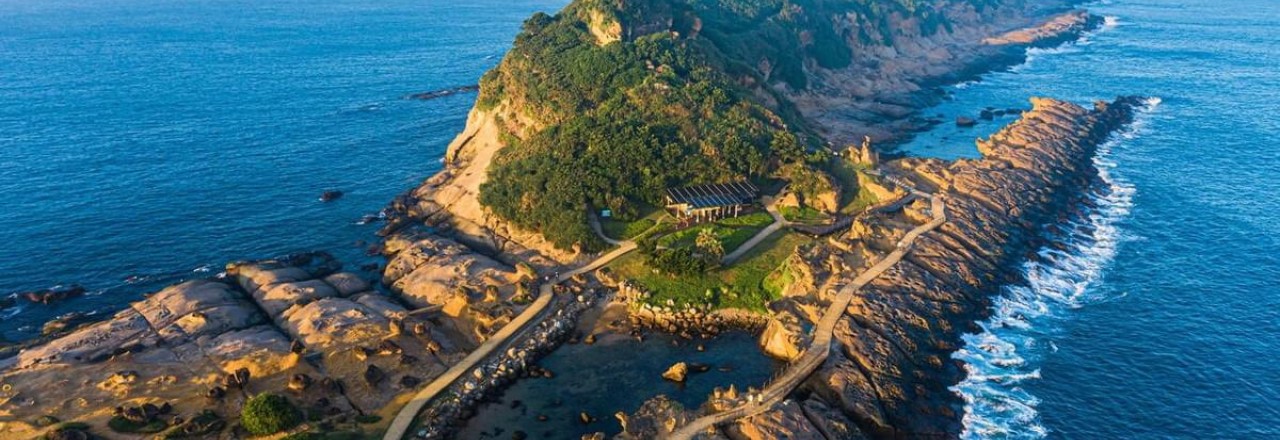
Located in the Ruifang District of New Taipei City, Jinguashi was once a sparsely populated wilderness. It was not until the 14th year of the Guangxu Emperor's reign (1888) that five farming families migrated to Beiwei and built five thatched huts to settle down, giving rise to the local placename "Wuhaoliao" (literally "Five Huts"). In the 19th year of Guangxu (1893), gold veins were discovered exposing the surface of "Dajingua" (Big Pumpkin Rock). This triggered a massive influx of residents moving here to join the gold mining boom. Following the start of the Japanese colonial period in the 21st year of Guangxu (1895), the Japanese arrived to extract gold, leading to another population explosion and rapid prosperity. This growth led to the expansion of areas like Guashan Li and Sanjian'an, gradually forming a prominent local community, earning Jinguashi the title of "East Asia's Premier Gold Capital." However, with the eventual decline of the mining industry, Jinguashi was spared from excessive commercial disruption, thereby preserving the original, authentic appearance of the mining area.
When traveling to Jinguashi, visitors can head to the Gold Museum park to gain a hands-on understanding of the region's historical development. A must-do experience within the Gold Museum is the gold panning activity. Furthermore, the surrounding area offers numerous attractions, including Qitang Old Street, Jinguashi Geopark, Shinto Shrine (Gold Shrine), Mount Teapot (Wuerchahu Mountain), the Kinkaseki POW Camp, Golden Waterfall, and the Jinzibei Historic Trail. Shinfen Shuinandong also connects directly to Jiufen, seamlessly linking Jinguashi and Jiufen into a comprehensive travel route. Visitors are highly encouraged to take advantage of a weekend getaway to plan an immersive journey through both Jinguashi and Jiufen.